
*Indicates new member in 2026
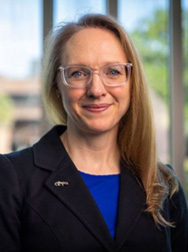
| Kristy Boyer*Professor, Computer & Information Science & Engineering Research Interests: How intelligent systems can support human learning and sport across a variety of contexts including within classrooms, out-of-school settings, recreational sports, collegiate sports, and elite/professional sport. Her research group builds computational models of the processes and phenomena in these contexts. |

| Cynthia Coburn*Northwestern University Research Interests: The relationship between instructional policy and teachers' classroom practices in urban schools, the dynamics of school district policy making, and the relationship between research and policy in education. |
 | Suzanne DonovanExecutive Director Research Interests: Building a program of work in partnership with school districts. Anchored in classroom and school practice. Primary author and co-editor of two SERP reports: Strategic Education Research Partnership and Learning and Instruction: A SERP Research. Directed the "How People Learn" Project at the National Academies since 1999. Previously on the faculty of the School of International and Public Affairs at Columbia University. |
 | Barry Fishman (Chair)Arthur F. Thurnau Professor Research Interests: Video games as models for learning environments, teacher learning and the role of technology in supporting teacher learning, and the development of usable, scalable, and sustainable learning innovations through design-based implementation research (DBIR), which he helped establish. Co-author of the Obama Administration's 2010 U.S. National Educational Technology Plan. Associate Editor of The Journal of the Learning Sciences 2005-2012. |
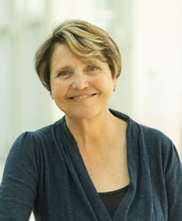 | Susan M. FitzpatrickChief Strategist Research Interests: Received her Ph.D. in Biochemistry and Neurology from Cornell University Medical College (1984) and pursued post-doctoral training with in vivo NMR spectroscopic studies of brain metabolism/function in the Department of Molecular Biochemistry and Biophysics at Yale University. Dr. Fitzpatrick lectures and writes on issues concerning applications of neuroscience to clinical problems, the translation of cognitive science to educational settings, the role of private philanthropy in the support of scientific research, and on issues related to the public dissemination of and understanding of science. |
 | Kathy Hirsh-PasekProfessor, Department of Psychology Research Interests: Research examines the development of early language and literacy, the role of play in learning, and the impact of screen time on children. Dr. Hirsh-Pasek received her Ph.D. from the University of Pennsylvania and is a frequent spokesperson for her field appearing in the New York Times, NPR and in international television outlets. Her research examines the development of early language and literacy, the role of play in learning, and the impact of screen time on children. |
 | Pani Kendeou*University of Minnesota, Twin Cities Research Interests: The development of theoretical models that explain how students learn during reading, and uses those models to design and test innovative, AI technologies that transform instruction and improve learning. The significance of her approach is in the development of theoretically oriented work and its translation into school-based practical applications. |
 | Gigi Luk*McGill University Research Interests: The cognitive consequences of bilingualism extends across the lifespan. In addition to investigating the science of bilingualism, she has examined how to harness scientific findings on bilingualism to improve the educational experience for children from diverse language backgrounds. |
 | Kent McGuire*Board Chair, Philanthropic Collaboration for Education Research Interests: Advisor to both the Stuart and Spencer Foundations, where he assists with convening, networking, proposal review and making connections between the worlds of philanthropy, public policy and educational practice. |
 | Danielle McNamaraExecutive Director, Learning Engineering Institute Research Interests: Cognitive processes involved in comprehension, writing, and learning, and to apply that understanding to educational practice by developing and testing educational technologies (e.g., iSTART, Writing Pal) and Natural Language Processing (NLP) tools (e.g., Coh-Metrix). NICHD. Previously served on the Governing Board for the Cognitive Science Society. Current President of the Society for Text and Discourse. |
 | Yuko Munakata*Department of Psychology and Center for Mind and Brain Research Interests: The cognitive, neural, and computational processes that support thinking and variations in thinking across diverse contexts. Her research focuses on executive functions, given the role that executive functions play in shaping thoughts and behaviors, the dramatic changes observed across development, and the links between executive functioning and important life outcomes. |
 | Colleen SeifertUniversity of Michigan Research Interests: Complex human cognition, including memory, learning, problem solving, and creativity. With collaborators, she is currently investigating cognitive accounts of creative thinking, and ways to improve the creative process. She is invested in improving learning and pedagogy in design, higher education, and applications in the public interest. |
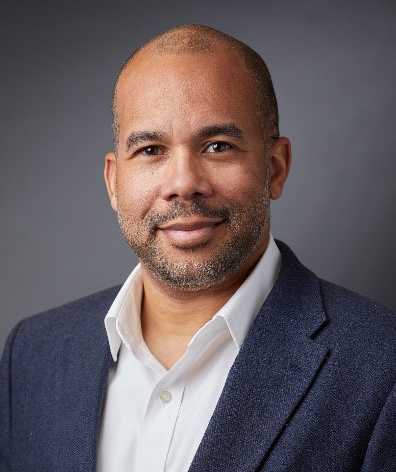 | Michael Strambler*Yale Child Study Center Research Interests: Three main themes. Early childhood care and learning examines factors and practices in childcare, educational, and home settings. Psychosocial wellbeing involves acquiring intrapersonal and interpersonal life skills such as self-control and managing interpersonal conflict. Finally, the sociopolitics of health and education aims to understand how sociopolitical factors shape the delivery of healthcare and education. |